
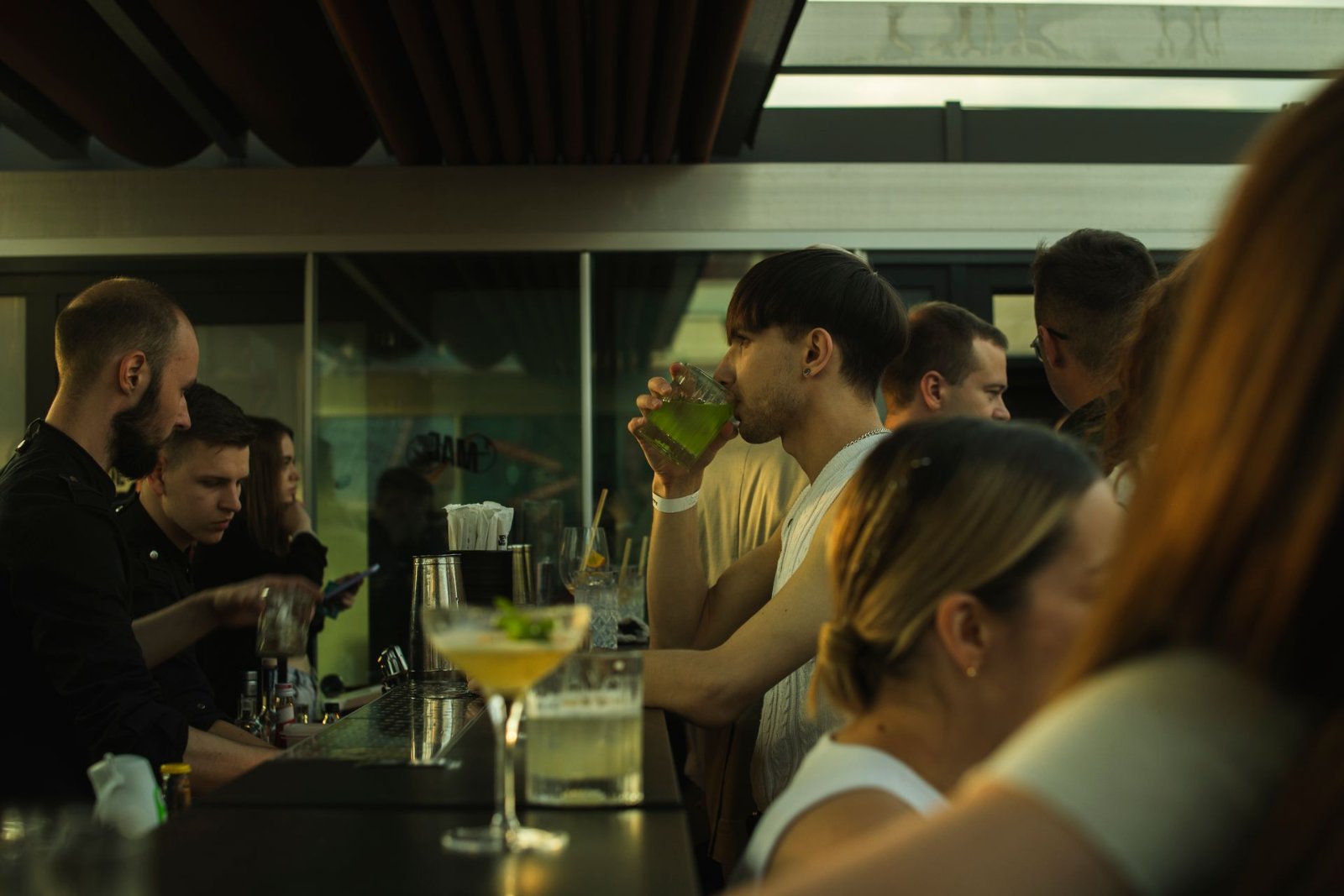
Have you ever noticed that a night out hopping between bars feels fundamentally different — more electric, more memorable, more alive — than simply settling into one spot for the evening? If so, you’re not imagining things. The science of how your brain processes pleasure, novelty, and social bonding offers a compelling explanation for why bar crawls feel so uniquely exhilarating. And in a city as vibrant and socially dynamic as Washington DC, the phenomenon is particularly pronounced.
From the historic cobblestone streets of Georgetown to the buzzing nightlife corridors of U Street and Adams Morgan, DC’s bar scene is perfectly designed — almost accidentally — to maximize the neurological rewards of group venue-hopping. Understanding the brain science behind this experience not only satisfies intellectual curiosity, it can help you make the most of your next night out. Whether you’re planning a birthday celebration, a corporate team event, or simply a memorable weekend adventure, services like Barcrawlerz are tapping into something deeply neurological when they organize structured bar crawl experiences across the capital.
Let’s dive deep into the neuroscience, the psychology, and the social dynamics that make bar crawls so uniquely rewarding.
Understanding Dopamine: The Brain’s Pleasure and Anticipation Chemical
Before we can understand why bar crawls trigger such intense pleasure responses, we need to understand dopamine itself. Dopamine is a neurotransmitter — a chemical messenger in the brain — that plays a central role in how we experience reward, motivation, and pleasure. It’s often called the “feel-good chemical,” but that description is an oversimplification. Dopamine is less about the experience of pleasure itself and more about the anticipation of reward.
Neuroscientist Wolfram Schultz’s groundbreaking research in the 1990s revealed that dopamine neurons fire most intensely not when a reward is received, but when a reward is expected. This distinction is crucial. Your brain is essentially a prediction machine, and dopamine is the fuel that keeps it running toward the next anticipated reward. When that reward is uncertain or novel, dopamine release increases even further.
“Dopamine is fundamentally about the prediction of reward, not the reward itself. Novelty, uncertainty, and anticipation are its most powerful triggers.” — Neuroscientist Wolfram Schultz
This is why the structure of a bar crawl — moving from venue to venue, never quite knowing what the next stop will bring — is neurologically optimized to keep dopamine levels elevated throughout the evening. Every new bar is a new anticipated reward. Every new environment is a novel stimulus. Every new social interaction is an unpredictable outcome. Your brain is essentially bathing in dopamine from the moment the crawl begins to the moment it ends.
The Dopamine Reward Cycle Explained
The dopamine reward cycle follows a predictable pattern: anticipation triggers dopamine release, the reward is experienced, dopamine levels normalize, and then the cycle resets in search of the next reward. In stationary social drinking — sitting at one bar all evening — this cycle completes relatively quickly. Once your brain has assessed the environment, catalogued the social dynamics, and settled into a routine, dopamine release tapers off. The evening can still be enjoyable, but the neurological intensity diminishes.
Bar crawls disrupt this normalization process by continuously introducing new environments, new social stimuli, and new anticipated rewards. Each venue transition resets the dopamine cycle, keeping anticipation — and therefore dopamine — elevated across the entire evening. The result is a sustained neurological high that stationary drinking simply cannot replicate.
The Neuroscience of Novelty: Why New Environments Supercharge the Brain
Novelty is one of the most powerful triggers for dopamine release. The human brain evolved to pay close attention to new information because, in our ancestral environment, novelty often signaled either opportunity or danger. New stimuli demanded attention, assessment, and response. The brain rewarded this attentiveness with dopamine, encouraging us to explore and engage with our environment.
In the context of a modern bar crawl in Washington DC, this ancient neurological mechanism is activated every time you step through the door of a new venue. Your brain immediately begins processing a cascade of new information: the decor, the lighting, the music, the crowd, the smell, the energy. This rapid environmental assessment triggers a dopamine surge that makes the new space feel exciting and alive.
Environmental Novelty and the Hippocampus
Research from University College London found that the hippocampus — the brain region associated with memory and spatial navigation — shows significantly increased activity in novel environments. This increased hippocampal activity is directly linked to dopamine release in the brain’s reward centers. In simple terms, being somewhere new doesn’t just feel good; it literally makes your brain more active and more engaged.
This explains why memories formed during bar crawls tend to be so vivid and long-lasting. The combination of novelty, social interaction, and dopamine release creates ideal conditions for memory consolidation. You’re more likely to remember a night spent hopping between five different bars in DC’s Capitol Hill neighborhood than a night spent at a single familiar venue, even if the objective “fun” level was similar.
How Washington DC’s Diverse Neighborhood Bar Scene Maximizes Novelty
Washington DC is uniquely positioned to deliver maximum novelty across a single evening. The city’s neighborhoods each have distinct personalities, architectural styles, and bar cultures. A bar crawl that moves from the craft cocktail lounges of Shaw to the Irish pubs of Dupont Circle to the rooftop bars of Navy Yard delivers a genuinely diverse sequence of environmental novelty that keeps the brain’s dopamine system firing on all cylinders.
Barcrawlerz, which organizes curated bar crawl experiences throughout Washington DC, understands this principle intuitively. By designing routes that move through varied neighborhoods and distinct venue types, they’re not just creating a fun night out — they’re architecting an experience that works with your brain’s neurological reward systems rather than against them.
Social Bonding, Oxytocin, and the Group Dynamics of Bar Crawls
Dopamine doesn’t operate in isolation. Its effects are amplified and sustained by other neurochemicals, most notably oxytocin — the so-called “bonding hormone” — and serotonin, which regulates mood and social behavior. Bar crawls, by their nature, create conditions that trigger all three of these neurochemicals simultaneously, producing a neurological cocktail that’s far more potent than any single chemical alone.
Oxytocin and the Power of Shared Experience
Oxytocin is released during positive social interactions, physical touch, and shared experiences. When a group navigates a bar crawl together — making collective decisions about where to go next, supporting each other through the logistics of moving between venues, sharing reactions to new environments — oxytocin release is triggered repeatedly throughout the evening.
This is fundamentally different from stationary social drinking, where the social dynamic tends to be more static. In a bar crawl, the group is continuously engaged in collaborative activity. You’re navigating together, experiencing novelty together, and building shared memories together. This ongoing collaborative engagement is a powerful trigger for oxytocin release, which in turn amplifies the pleasurable effects of dopamine.
“Shared novel experiences create stronger social bonds than shared familiar experiences. The brain encodes novelty and social connection through overlapping neurological systems, meaning that experiencing something new with others is neurologically more bonding than experiencing something familiar together.”
The Social Facilitation Effect in Group Venue-Hopping
Social psychology has long documented the “social facilitation effect” — the tendency for people to perform better and feel more aroused in the presence of others. In the context of bar crawls, this effect manifests as heightened emotional responses to each new environment. Things that might seem mildly interesting alone become genuinely exciting when experienced with a group. Music sounds better. Drinks taste better. The atmosphere feels more electric.
This is because social context modulates how the brain processes sensory information. The presence of enthusiastic, engaged companions amplifies your own neurological response to stimuli. A rooftop bar with a stunning view of the Washington Monument becomes a genuinely transcendent experience when shared with a group of friends who are equally captivated. Alone or in a static social setting, the same view might register as pleasant but unremarkable.
The Role of Uncertainty and Variable Rewards in Bar Crawl Dopamine Release
One of the most fascinating aspects of dopamine neuroscience is the concept of variable reward schedules. Research pioneered by B.F. Skinner and later refined by neuroscientists studying addiction and reward demonstrated that unpredictable rewards trigger far more intense dopamine responses than predictable ones. This is the same neurological mechanism that makes slot machines so compelling — you never know when the next reward is coming, and that uncertainty keeps dopamine elevated.
Bar crawls are essentially a socially acceptable, health-positive version of a variable reward schedule. You never quite know what the next bar will be like. Will it be packed with energy? Will you discover an incredible new cocktail? Will you meet interesting new people? Will the music be perfect? This uncertainty — this delicious unpredictability — keeps your dopamine system in a state of heightened anticipation throughout the entire evening.
The “What’s Next?” Effect
Neuroscientists have identified what they call the “what’s next?” effect — the brain’s tendency to generate dopamine in anticipation of discovering what comes after a current experience. This effect is particularly pronounced when the next experience is genuinely unknown. In a bar crawl context, the moment you finish your drink at one venue and begin moving toward the next, your brain enters a state of heightened dopaminergic anticipation. The walk between bars — often dismissed as mere transit — is actually one of the neurologically richest moments of the entire evening.
Barcrawlerz leverages this effect by building genuine anticipation into their DC bar crawl experiences. Rather than revealing the entire evening’s itinerary upfront, the best bar crawl organizers maintain an element of surprise, allowing participants’ brains to generate maximum anticipatory dopamine at each transition point.
How Alcohol Interacts With the Dopamine System During Bar Crawls
It’s important to acknowledge that alcohol itself affects the dopamine system. Alcohol consumption triggers dopamine release in the brain’s reward centers, which is part of why it produces feelings of pleasure and relaxation. However, the relationship between alcohol and dopamine is complex. With continued consumption at a single venue, the brain begins to habituate to the dopaminergic effects of alcohol, requiring more to achieve the same response — a phenomenon known as acute tolerance.
The venue-hopping structure of a bar crawl may actually work in favor of more moderate, sustainable alcohol consumption. The novelty and social stimulation of each new environment provides its own independent dopamine boost, meaning participants may feel more satisfied with less alcohol than they would in a stationary setting where alcohol is the primary source of neurological stimulation. This is a subtle but important point: bar crawls may actually encourage more mindful drinking by supplementing the dopamine reward system with non-alcohol-derived stimulation.
The Neurological Benefits of Physical Movement Between Venues
One aspect of bar crawls that’s rarely discussed in the context of neuroscience is the physical movement between venues. Walking — even short distances — has well-documented effects on brain chemistry. Exercise, including moderate walking, triggers the release of endorphins, serotonin, and dopamine. It also increases blood flow to the prefrontal cortex, enhancing mood, creativity, and social cognition.
The walks between bars on a DC bar crawl — through neighborhoods like Logan Circle, the H Street Corridor, or the vibrant blocks of Chinatown — are not merely transitional. They’re neurologically active periods during which your brain is simultaneously processing the novel urban environment, engaging in social conversation, and experiencing the mood-elevating effects of physical movement. This creates a neurological bridge between venues that sustains and even amplifies the dopamine response from the previous stop while building anticipation for the next.
Urban Environments and Dopamine: The Washington DC Advantage
Research in environmental neuroscience has shown that urban environments — with their rich sensory complexity, diverse architecture, and constant social activity — are particularly effective at triggering dopamine release. Washington DC’s built environment, with its iconic monuments visible from numerous vantage points, its diverse architectural styles, and its energetic street life, provides an exceptionally stimulating backdrop for bar crawl transitions.
Walking past the illuminated dome of the US Capitol on a warm DC evening, or catching a glimpse of the Washington Monument reflected in the Tidal Basin while moving between venues in the Southwest Waterfront neighborhood, delivers genuine neurological rewards that compound the dopaminergic effects of the bar crawl itself. The city becomes part of the experience, not just a backdrop to it.
Social Identity, Group Cohesion, and the Bar Crawl Experience
Neuroscience and social psychology converge on an important point: humans are profoundly social creatures whose neurological reward systems are deeply intertwined with group membership and social belonging. Participating in a shared activity with a defined group — particularly one that involves navigating novel environments together — activates brain regions associated with social identity and group cohesion.
Bar crawls, particularly organized ones like those offered by Barcrawlerz in Washington DC, create a temporary but powerful sense of group identity. Participants are part of a defined group with a shared purpose, moving through the city together, experiencing the same sequence of environments, and building a shared narrative of the evening. This sense of group membership and shared experience triggers neurological rewards that go well beyond the simple pleasure of drinking with friends.
The Role of Shared Narrative in Memory and Bonding
One of the most powerful aspects of the bar crawl experience is the shared narrative it creates. Because participants move through multiple distinct environments and experience a sequence of varied events, the evening generates rich material for storytelling and shared memory. Neuroscience tells us that narrative memory — memory organized around a story with a beginning, middle, and end — is particularly durable and emotionally resonant.
A bar crawl has an inherent narrative structure: the gathering, the first venue, the transitions, the high points, the unexpected moments, the finale. This narrative structure makes bar crawl memories particularly vivid and long-lasting, and it gives participants a shared story that continues to bond them long after the evening ends. Every time the group reconvenes, the bar crawl narrative provides a touchstone for social connection and shared identity.
Practical Implications: How to Maximize Your Neurological Rewards on a DC Bar Crawl
Understanding the neuroscience of bar crawls isn’t just intellectually interesting — it has practical implications for how you can design and experience bar crawl events to maximize their neurological rewards. Whether you’re organizing your own crawl or participating in one of Barcrawlerz’s curated Washington DC events, these science-backed strategies can help you get the most out of the experience.
Embrace Genuine Novelty in Venue Selection
The neurological benefits of bar crawls are maximized when venues are genuinely diverse — not just geographically but in terms of atmosphere, music, decor, and drink offerings. A crawl that moves from a quiet craft cocktail bar to a lively sports bar to a rooftop venue with live music delivers far more neurological variety than one that visits five similar establishments. When planning or choosing a bar crawl in DC, prioritize genuine diversity of experience over convenience or familiarity.
Maintain the Element of Surprise
As we’ve discussed, uncertainty is a powerful dopamine trigger. If you’re organizing a bar crawl, consider keeping the full itinerary partially secret, revealing the next venue only when the group is ready to move. This maintains the anticipatory dopamine response that is so central to the bar crawl’s neurological appeal. Barcrawlerz does an excellent job of building this element of discovery into their organized DC events.
Engage Actively With Each New Environment
The novelty response is most powerful when you actively engage with new environments rather than passively inhabiting them. At each new venue, take a moment to consciously observe the space — the decor, the crowd, the atmosphere. Talk to the bartenders about their signature drinks. Explore different areas of the venue. This active engagement amplifies the novelty response and maximizes dopamine release.
Prioritize Group Cohesion During Transitions
The walks between venues are neurologically rich moments that are often underutilized. Rather than treating transitions as dead time, use them for meaningful group interaction — share reactions to the previous venue, build anticipation for the next, engage with the urban environment around you. In Washington DC, these transition moments offer opportunities to engage with some of the world’s most iconic urban scenery, adding an additional layer of environmental novelty to the experience.
Why Barcrawlerz Understands the Science of Memorable Nights Out in Washington DC
Barcrawlerz has built its reputation in Washington DC by creating bar crawl experiences that — whether intentionally or intuitively — align with the neuroscience of optimal pleasure and social bonding. Their curated routes through DC’s most vibrant neighborhoods deliver genuine environmental novelty, maintain group cohesion, build anticipatory excitement, and create the kind of shared narrative that bonds participants and generates lasting memories.
By moving groups through carefully selected venues that offer diverse atmospheres and experiences, Barcrawlerz is essentially architecting dopamine-optimized evenings. The social infrastructure they provide — organized groups, guided routes, venue coordination — removes the logistical friction that can disrupt the neurological flow of a bar crawl, allowing participants to focus entirely on the experience itself.
For residents and visitors in Washington DC looking to experience the full neurological rewards of group venue-hopping, organized bar crawl services like Barcrawlerz offer a compelling value proposition: not just a fun night out, but a neurologically optimized social experience designed to deliver maximum pleasure, bonding, and memorable moments.
The Broader Significance: What Bar Crawl Neuroscience Tells Us About Human Social Behavior
The neuroscience of bar crawls ultimately tells us something profound about human nature. We are creatures who crave novelty, social connection, and shared experience. Our brains evolved to reward exploration, cooperation, and the building of social bonds through shared adventure. Bar crawls, at their best, tap into these deep evolutionary drives in a modern, urban context.
The fact that group venue-hopping triggers more intense pleasure responses than stationary social drinking isn’t a quirk or a coincidence — it’s a reflection of our fundamental neurological architecture. We are built to explore together, to share novel experiences, and to bond through collective adventure. The bar crawl is, in this sense, a remarkably modern expression of a very ancient human impulse.
“The human brain is fundamentally an exploration machine. It rewards novelty, social connection, and shared adventure with its most powerful neurochemical responses. Bar crawls, perhaps unintentionally, have discovered the formula for triggering all three simultaneously.”
In Washington DC — a city that draws adventurous, socially engaged people from around the world — the conditions for this kind of neurologically rich social experience are particularly favorable. The city’s diverse neighborhoods, iconic landmarks, vibrant bar culture, and energetic social scene create an ideal environment for the kind of group venue-hopping that maximizes dopamine release, oxytocin bonding, and the formation of lasting social memories.
Conclusion: Science Confirms What Bar Crawl Enthusiasts Have Always Known
The neuroscience is clear: group venue-hopping triggers more intense and sustained pleasure responses than stationary social drinking. The combination of environmental novelty, social bonding, physical movement, variable reward schedules, and shared narrative creation produces a neurological experience that is genuinely richer and more rewarding than any single venue can provide.
For Washington DC residents and visitors looking to experience this neurological phenomenon firsthand, the city offers an extraordinary canvas. From the historic bars of Georgetown to the trendy cocktail lounges of Shaw, from the rooftop venues overlooking the Capitol to the neighborhood dive bars of Columbia Heights, DC’s bar scene is perfectly suited to the kind of diverse, stimulating venue-hopping that the brain’s dopamine system craves.
Services like Barcrawlerz make it easier than ever to access these neurological rewards by handling the logistics of organized bar crawls across the capital. By removing the friction of planning and coordination, they allow participants to fully immerse themselves in the experience — and in doing so, to access the full spectrum of neurological rewards that make group venue-hopping so uniquely and powerfully pleasurable.
So the next time someone asks why bar crawls feel so much more electric than a quiet night at a single bar, you’ll have an answer that goes well beyond “it’s just more fun.” It’s neuroscience. It’s dopamine. It’s the ancient human drive to explore, connect, and share adventure. And in Washington DC, with the right company and the right guide, it’s one of the most neurologically rewarding experiences the city has to offer.